Location
School of Interactive Computing,
Georgia Institute of Technology
85 5th St., TSRB 338A
Atlanta, GA 30332-0760
PH.D. ALUMNI

Jill Dimond
Jill Dimond completed her PhD in August of 2012 in Human-Centered Computing from the Georgia Institute of Technology. Her dissertation focused on the relationship between activists and technology. Jill specifically partnered with Hollaback, an organization working to stop street harassment. She additionally holds a B.S in Computer Science from the University of Michigan. Jill is currently a worker-owner at Sassafras Tech Collective, a worker-owned cooperative focusing on web/app design and development specializing in social justice causes.

Julia Deeb-Swihart
Julia Deeb-Swihart is a software engineer at Parsons Corporation. She was previously an assistant teaching professor in the University of Washington Information School. She completed her Ph.D. in computer science at Georgia Tech in 2022.

Betsy DiSalvo
Betsy DiSalvo graduated with her PhD in May 2012 and is now an Associate Professor in the School of Interactive Computing at Georgia Tech. She leads the Culture and Technology Lab (CAT Lab), which is focused on understanding how cultural values impact the use of technology and motivations for learning.

Jason Elliott
Jason Elliott obtained his Ph.D. in Computer Science from the Georgia Institute of Technology in December, 2005. His dissertation research involved describing different approaches to exploration in the AquaMOOSE 3D environment, a graphical online community designed to provide students with a novel way to explore and learn about mathematics. Jason received his B.S. degree in Computer Science from North Carolina State University in 1997 and his M.S. degree in Computer Science from the Georgia Institute of Technology in 2001.

Jason Ellis
Jason Ellis is a software engineer at IBM. He was formerly a research scientist at the IBM T.J. Watson Research Center in New York. He earned his Ph.D. in Computer Science at the Georgia Institute of Technology in 2003. Prior to Georgia Tech, he was a faculty researcher at the Human-Computer Interaction Lab at the University of Maryland, College Park, where he also received an undergraduate degree with honors in Computer Science. His PhD thesis was an online community that supports kids interviewing elders on the Internet to build up a shared multimedia archive of oral history.

Casey Fiesler
Casey Fiesler is a an Associate Professor and the William R. Payden Endowed Professor in the Department of Information Science (and Computer Science, by courtesy) at the University of Colorado Boulder. She researches and teaches in the areas of technology ethics, internet law and policy, and online communities. She finished her Ph.D. in Human-Centered Computing at Georgia Tech in 2015. Her dissertation research examined how copyright law impacts creative expression on the Internet. Casey has a J.D. from Vanderbilt University and an M.S. in HCI and B.S. in Psychology from Georgia Tech.

Andrea Forte
Andrea Forte is dean of the University of Michigan School of Information. She studies and designs technologies that support collaboration, cooperation, and learning. Her research spans the areas of computer-supported cooperative work, social computing, and the learning sciences. She graduated from the Georgia Tech College of Computing with a PhD in 2009.

Sucheta Ghoshal
Sucheta Ghoshal is an assistant professor at the Department of Human Centered Design & Engineering at the University of Washington, where she directs the research group Inquilab. She is interested in studying—and building—computational cultures that refuse, resist, subvert, or exceed the state and market imaginaries of computing. She completed her PhD in Human-Centered Computing at Georgia Tech in 2020.

Jim Hudson
Jim Hudson finished his Ph.D. in Computer Science from the College of Computing at the Georgia Institute of Technology. His dissertation research looked at how small group discussions for educational purposes change when they move from the face-to-face classroom into an online chat environment. He worked as a postdoctoral researcher in Advanced Concepts & Technologies at Pitney Bowes, studying the management of the innovation process inside of corporate settings. He was previously the Global Research Manager of Customer Experience and Design with Paypal.

Shagun Jhaver
Shagun Jhaver is an Assistant Professor in the Department of Library and Information Science in the School of Communication and Information at Rutgers University, where he directs the Social Computing Lab. His research focuses on improving content moderation on digital platforms, critically examining how the design, technical affordances, and policies of large-scale platforms influence the experiences of different stakeholders. He received his Ph.D. in computer science from Georgia Tech in 2020.

Kurt Luther
Kurt Luther completed his Ph.D. in Human-Centered Computing at Georgia Tech in 2012. For his dissertation work, he studied leadership in online creative collaboration and led the development of Pipeline, a free software tool for organizing creative projects online. While in graduate school, Kurt interned with YouTube's User Experience team and the Social Computing groups at Microsoft Research and IBM Research. He was previously a postdoctoral fellow in the HCI Institute at Carnegie Mellon University, and is now an Associate Professor of Computer Science at Virginia Tech.

Sarita Schoenebeck
Sarita Yardi Schoenebeck is a Professor in the School of Information at the University of Michigan, where she directs the Living Online Lab. Her research is in the areas of Social Computing, Social Media, and HCI. Her main focus of research investigates how families manage social media and technology use in their everyday lives. She completed her PhD in Human-Centered Computing at Georgia Tech in 2012. She received her MS from UC Berkeley and her BA from Dartmouth College.

Michaelanne Thomas
Michaelanne Thomas is an Assistant Professor at the University of Michigan School of Information, where she runs the Anthropology and Technology Lab. She studies how marginalized communities use information communication technologies in politically and resource-constrained contexts. Michaelanne obtained her Ph.D in Human-Centered Computing from Georgia Tech in 2019, where her dissertation analyzed how people in Havana, Cuba used multiple information infrastructures to create a uniquely "Cuban" internet. She holds an M.A. in cultural anthropology from Georgia State University and a B.A. in Spanish from the University of Georgia. She also has more than seven years of professional experience in the field of public relations and social media.

José Zagal
Dr. José P. Zagal is a Professor in the Division of Games at the University of Utah. He teaches courses on game design, ethics in videogames, and experimental games. He is also interested in supporting games literacy through the use of collaborative learning environments. His book on this topic, “Ludoliteracy: Defining, Understanding, and Supporting Games Education” was published in 2010. More recently he edited “The Videogame Ethics Reader” (2012), a collection of writings that provide an entry point for thinking, deliberating, and discussing ethical topics surrounding videogames. José completed his PhD in Computer Science in 2008, where his research explored the development of frameworks for describing, analyzing, and understanding games from a critical perspective to help inform the design of better games.
M.S. ALUMNI

Lori Adams
Lori received her Masters in HCI from the College of Computing at Georgia Tech in 2002. Her research involved exploring how the AquaMoose 3D software impacted the learning of high school math students. Prior to her Masters, Lori received her B.S. degree in Media Studies from the Ohio University School of Communications. She is currently working as Senior Vice President of User Experience at IfThen, LLC.

Josh Berman
Josh Berman is Senior Vice President for Corporate Development at Jackson Healthcare, and was previously COO and co-founder of Alii Healthcare, a healthcare technology startup in Atlanta. While completing a National Science Foundation traineeship with the ELC group, he and Professor Bruckman created The Turing Game, which received a Global Information Infrastructure award from Ziff Davis, and was a finalist for both the Ars Electronica and Stockholm Challenge Awards. In addition to his work with the ELC lab, Josh has completed research in residence at Time Warner Entertainment, Microsoft Research and The Santa Fe Institute. He has also held various positions in the software and financial industries.

Jessica Feuston
Jessica Feuston is a Senior UX Researcher at Meta. As a graduate research assistant in the ELC Lab, she studied the impact of copyright law on creative works within online communities. Jessica has a PhD in Technology and Social Behavior from Northwestern University, as well as an M.S. and B.S. from Georgia Tech in Human-Computer Interaction and Computational Media, respectively. She worked for an enterprise software consulting company prior to continuing her studies. At Georgia Tech, one of her favorite activities outside of research was playing bocce in Piedmont Park.

Joe Gonzales
Joe Gonzales is the Director of UX Research @ Ibotta. As a graduate researcher in the ELC Lab, he studied the social processes behind how groups of people give each other useful feedback. He looks for opportunities to use HCI and Service Design to create experiences that people will love. Joe has an M.S. in HCI and a B.S. in Biomedical Engineering.

Susan Gov
Susan Gov received her MSCS with a specialization in HCI in 2006. She worked on a user study for her Masters project that entails studying how users create identities in online communities and how these identities are maintained across various online communities/social networking sites. Her goal was to understand how the context of an online community affected the way its members create and manage their identities within that community.

Addy Lee
Addy Lee received her MS in HCI at the Georgia Institute of Technology in 2007. She conducted a study of dating behavior on social networking sites, MySpace and Friendster. Her goal was to understand how public display of social connections and the ability to comment on profiles influence how users search, contact, and communicate with potential dates. Addy now works at YouTube in the San Francisco Bay Area. Addy received a BA in Psychology from Vanderbilt University.
 In Memory Of
Scott Lewis (1976–2022)
Scott Lewis received his Bachelor's degree in Computer Science and his Master's degree in Human-Computer Interaction from Georgia Tech in 2001. During his stay, he worked with Jason Elliott on AquaMOOSE 3D. Scott worked in the video game industry as a designer/programmer and user interface lead for 11 years, before starting a career teaching high school math and science in 2017. Scott is survived by his wife, his parents, his brother Eric and his wife Kristin Lewis and their children Benjamin and Ellie, his brother Todd and his wife Melissa Lewis, his paternal grandmother Margie Lewis, and a large extended family of loving uncles, aunts, and cousins.

Amon Millner
Dr. Amon Millner is an Associate Professor of Computing and Innovation at the Olin College of Engineering. In his work, he develops technologies, community programs, and resources to facilitate learners (ages 5 and up) incorporating computing into the way that they play, learn, prepare to fully participate in society, and uplift their communities. This research builds upon interests he developed as a member of the ELC group: understanding how youth relate to computer programming in informal after-school learning environments (like Computer Clubhouses). He completed his PhD in Media Arts and Sciences at MIT's Media Lab as part of the Lifelong Kindergarten Research group (2010). He holds an MS in Media Arts and Sciences from MIT (2005), an MS in Human Computer Interaction from Georgia Tech (2003), and a BS in Computer Science from USC (2001).

Jared Parsons
Jared is a Principal Developer at Microsoft, designing type and concurrent safe programming languages. His passion, at work and home, remains forever on providing quality tools for other developers to play with. He received his Bachelors degree from Georgia Tech in 2003. While at Georgia Tech, he spent almost 2 years working as a research assistant to Jason Elliot on his project AquaMoose3D where he implemented the networking communication and data storage layers.

Hannah Pileggi
Hannah Pileggi is an experienced UX research leader, previously working at Duolingo, Airbnb, and Meta. She is currently serving as a Limited Partner and Angel Investor at The Helm. She received her MS from the ELC Lab in 2013, her B.S. in Statistics from Carnegie Mellon University in 2011.
UNDERGRAD ALUMNI (under construction)

Matthew Flaschen
Matthew Flaschen graduated from Georgia Tech in 2010 with a major in CS. He now currently is a developer at the Wikimedia Foundation. He worked on ProveIt, a tool to manage wikipedia references.

Anne Hewitt
Anne Hewitt graduated Georgia Tech with undergraduate degree in Computer Science in 2008 and started her career as a part of the Technology Analyst Program at Merrill Lynch where she supported the Wealth Management technology. Currently, she manages Bank of America’s private cloud infrastructure. Anne is also an MBA student at Georgia Tech’s Scheller College of Business.

Terris Johnson
Terris Johnson received his BS in Computational Media in Spring 2011 with a Social / Personality psychology certificate. His undergraduate research experience focused on utilizing video games as a launch pad for personal ( Jose Zagal ) and educational improvement ( Betsy DiSalvo ), and helped to improve the User Experience around creating Wikipedia citations for non-technical users ( Kurt Luther ). Terris has been practicing UX professionally since June 2012; having produced work for clients like Verizon Wireless, Georgia-Pacific, Children's Healthcare of Atlanta, BB+T, as well as a local Atlanta startup.

Koushik Krishnan
Koushik Krishnan is a Production Engineer at Meta. He graduated from Georgia Tech with a BS in Computer Science and Mathematics. As an undergraduate, he pursued his passion for computer science not only through classes but also through hackathons, research, and College of Computing student groups like the ACM Programming Team and GreyHat. He worked under Joe and helped him in the development of the PeerFeedback website. In his free time, Koushik likes to play ultimate frisbee and take apart old appliances and re-purpose them into new machines (ex. transforming an old microwave into an arc welder).

Pam Krolikowski
Pam Krolikowski a 5th year student at the University of Maryland at College Park. She is majoring in computer science and minoring in philosophy.

Taneshia Marshall
Taneshia Marshall graduated from Georgia Tech with a BS in Computational Media and a certificate in Social/Personality Psychology. She obtained a Masters in Education specializing in Learning, Design, and Technology at the University of Ga. She's currently a Game Programmer/Software Developer working on ways to use technology to motivate and improve learning and awareness.

Anne Marie Piper
Anne Marie received her BS in Computer Science from Georgia Tech. Her undergraduate research addressed female use of technology at an Intel Computer Clubhouse. She also investigated how Alice, a 3D programming environment, could teach object-oriented programming to middle school students. After Georgia Tech, she received her MA in Learning, Design, and Technology from Stanford University and her PhD in Cognitive Science at the University of California, San Diego. She is now an Assistant Professor in Communication Studies at Northwestern University.
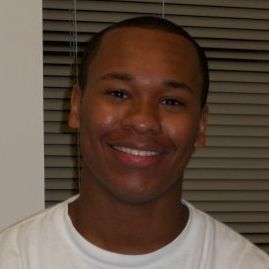
Corey Steward
Corey Steward received his BS in Computer Science from Georgia Tech in December 2010. His undergraduate research explored the passion that young urban African American males have for video games and how that passion can be leveraged into an interest in computer science. He is currently working at Microsoft as an Information Security Program Manager for Microsoft Office Products.

Joe Uhl
Joe received his Bachelors degree from Georgia Tech in 2004. While pursuing a MSCS in 2005 he left to help start WeTheCitizens, Llc and now serves as a senior software engineer and head of their technical operations. During his time at Georgia Tech he worked on the Moose Crossing project.

Bao Vu
Bao Vu graduated from Georgia Tech with a BS in Computer Science. As a member of the ELC Lab, he worked to publish a new website to raise awareness of issues relating to copyright and fair use and to promote online creativity. He is a mix of a UI designer and a crazy coder.