|
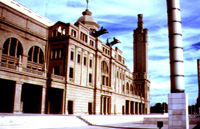 The main consideration
regarding Barcelona is that it is on the
Mediterranean and in Catalonia, a
unique region of Spain.
It is important to realize that Spain consists of regions
that are culturally and linguistically vastly different. Perhaps
it is worthwhile to begin by stating what Catalonia is not: it is
not the region known for bullfighting or flamenco music (this
aptly describes Andalucia, in the south of Spain), nor the region
rich in Celtic influence where the bagpipe is played (this
describes Galicia, in the northwest of Spain), nor is it where the
new Guggenheim museum is (that is the Basque region). The main consideration
regarding Barcelona is that it is on the
Mediterranean and in Catalonia, a
unique region of Spain.
It is important to realize that Spain consists of regions
that are culturally and linguistically vastly different. Perhaps
it is worthwhile to begin by stating what Catalonia is not: it is
not the region known for bullfighting or flamenco music (this
aptly describes Andalucia, in the south of Spain), nor the region
rich in Celtic influence where the bagpipe is played (this
describes Galicia, in the northwest of Spain), nor is it where the
new Guggenheim museum is (that is the Basque region).
However, Catalonia is,
and has, many other remarkable things. Catalonia is known for its cultural
and artistic heritage. The architect Gaudi, and painters such as Joan
Miro' and Salvador Dali' are but a few examples of Catalonia's
contribution to 20th Century art. Catalonia
also offers a vibrant cosmopolitan atmosphere (perhaps due to its
geographical proximity to France and other
countries). A major attraction (and an economically important aspect)
of the region is its Mediterranean cuisine and its production of
wines (such as Freixenet and Codorniu). Importantly, Catalonia is a world-recognized
model for blending art, culture, urban planning, and industry. Indeed,
the region combines a rich mixture of high tech industries, culture,
medical centers, and institutions of higher learning (numerous US companies
have a strong presence in the region, and there are several
colleges and universities serving the region).
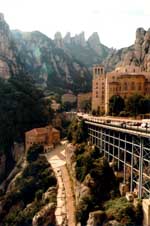 Barcelona is the capital of Catalonia. It
was founded in the third century and has been ruled by Romans,
Visigoths, Moors and Franks over the centuries. The influences of these
periods are still visible throughout the city. Since the Middle Ages, Barcelona has been a major port and commercial
center, and is Spain's
second largest city and a major industrial center. Barcelona is the capital of Catalonia. It
was founded in the third century and has been ruled by Romans,
Visigoths, Moors and Franks over the centuries. The influences of these
periods are still visible throughout the city. Since the Middle Ages, Barcelona has been a major port and commercial
center, and is Spain's
second largest city and a major industrial center.
Barcelona is bounded by the ocean (the
Mediterranean) and the mountains (the Pyrenees),
offering contrasting sights and experiences throughout the seasons and
within relatively short distances. It is close to Andorra and France,
and also to the Baleares Islands (including its most famous island,
Ibiza). There is an excellent, clean, and inexpensive network of
bus, metro and railroad services connecting portions of the city
as well as the city to the region and the rest of Europe.
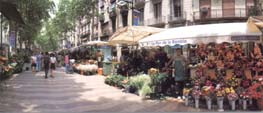 Barcelona is a city full of tree-lined boulevards, open
spaces, and architectural diversity. Large, public sculptures abound
throughout the city, and the people of Barcelona (as do most Spaniards)
take to these public parks and boulevards for their daily afternoon
stroll (paseo). The city has preserved numerous historic places and
combined them with the very modern. As host of the 1992 Summer
Olympics, a number of new structures have emerged, with some areas
literally added by extending the land toward the sea. Perhaps the most
striking aspect of Barcelona
is the cultural pace of the city: each week, there are countless fairs,
expositions, exhibits, performances, and artistic events to choose
from. Moreover, Barcelona
has an amazing diversity of restaurants and cafes offering superb
culinary experiences as well as informal, low-cost meals. And, then, of
course, there are the beaches. It is no wonder that Barcelona is a major tourist center
and an increasingly active port-of-call for cruise ships. One of the
most noteworthy and interesting characteristics of Barcelona is its
dynamism: the city has continually re-invented itself by fusing art,
history, politics, environmental concern, and commerce in what is
generally considered to be a model of urban planning and development. Barcelona is a city full of tree-lined boulevards, open
spaces, and architectural diversity. Large, public sculptures abound
throughout the city, and the people of Barcelona (as do most Spaniards)
take to these public parks and boulevards for their daily afternoon
stroll (paseo). The city has preserved numerous historic places and
combined them with the very modern. As host of the 1992 Summer
Olympics, a number of new structures have emerged, with some areas
literally added by extending the land toward the sea. Perhaps the most
striking aspect of Barcelona
is the cultural pace of the city: each week, there are countless fairs,
expositions, exhibits, performances, and artistic events to choose
from. Moreover, Barcelona
has an amazing diversity of restaurants and cafes offering superb
culinary experiences as well as informal, low-cost meals. And, then, of
course, there are the beaches. It is no wonder that Barcelona is a major tourist center
and an increasingly active port-of-call for cruise ships. One of the
most noteworthy and interesting characteristics of Barcelona is its
dynamism: the city has continually re-invented itself by fusing art,
history, politics, environmental concern, and commerce in what is
generally considered to be a model of urban planning and development.
The people of Barcelona speak
Catalan and Spanish, and many are fluent in French. Many Catalans
speak English (it is now required in public middle schools), and it
is common to see signs in English and German (especially in the
height of the summer tourist season). As might be expected, you
need not speak Catalan or Spanish to fully enjoy Barcelona. For a light-hearted view
of these and other cultural aspects of living in Barcelona, please see the Living section.
|








